Chapter 2 of 5
Image, Form and Hairstyling
The verses “Let us make man in our image, after our likeness” and “And God created man in His image” might suggest that God has a human form. Maimonides, at the beginning of the Guide of the Perplexed, argues against such a view, which was widespread in the Middle Ages.
Maimonides’ distinction
In his view, some words describe only a physical structure (such as to’ar, “shape”, or tavnit, “form”), and are therefore inappropriate for God. By contrast, tzelem (“image”) and demut (“likeness”) are abstract words. The philosophical background: in the Middle Ages it was commonly held that everything has a “purpose” – a good clock is one that shows the right time, a good car is one that drives well. The purpose of man, on this view, is knowledge – the intellect. That is man’s “image”: not his physical shape but his intellect, and in this he has something in common with God.
Yet there is a blessing among the Sheva Berakhot (the seven wedding blessings) that seems to contradict this: “...who created man in His image, in the image of the likeness of His form (tavnit)...” – but tavnit is a physical word according to Maimonides! The Semag cites Rav Saadia Gaon, who reads “and in the image of the likeness of his form” with a connecting vav: God created man in His image, and then created woman according to the physical form of the man. But Rav Saadia Gaon is the only authority who added that vav – everyone else, including Maimonides himself, transcribes the blessing without it. Other commentators suggest that “his form” refers only to the connection between body and soul, and not to any attribute of God.
The bridal salon in the Garden of Eden
The Mishnah (Shabbat 94b) forbids make-up and hair care on Shabbat: braiding hair, applying kohl to the eyes and arranging the hair. All agree that it is forbidden – the dispute concerns only the severity: the Sages forbid it rabbinically, while Rabbi Eliezer holds one is liable by Torah law. The Gemara clarifies which category of labor is involved: applying kohl – because of dyeing; braiding and arranging – because of building. The Gemara wonders: is this really “a manner of building”? It answers with the exposition of Rabbi Shimon ben Menasya on “And the Lord God built the rib” – God braided Eve’s hair before bringing her to Adam, for “builder” (banait) is a term for a woman who braids hair.
Which braiding counts as “building”?
The reference may be to the Roman hairstyles of the period – tall, elaborate structures, seen in the statues of distinguished Roman women. According to one study, Roman women even sewed their hair with needle and thread to create a stable structure. This also explains why there is no problem here of “a structure not made to last”.
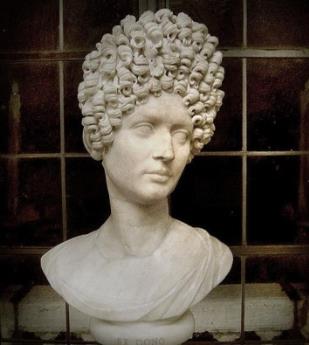
Does “building” apply to the human body?
There is a dispute over whether the prohibition of “building” applies to something not attached to the ground, such as utensils. But even according to the view that building does apply to utensils, the Avnei Nezer proves that there is no “building” in the human body: Maimonides (Laws of Shabbat 10:17) rules that one who lances an abscess is liable for “striking with the hammer” (finishing a product), not for “building”. This is therefore difficult: how could Maimonides rule that a woman who braids hair is liable specifically for building?
His answer: a small repair to the body, such as opening an abscess, is not “building”. But the creation of the woman from the rib – producing a complete “vessel” from nothing – is indeed considered building.
A difficulty with this answer
The Avnei Nezer assumes that the “building” in the verse is the creation of the woman herself. But in Berakhot (61a) Rav and Shmuel dispute the nature of the “rib”: according to one view it was a “face” (man was created with two faces, male and female together, and the woman was separated from him). According to the other view, it was a “tail” (the woman was built from an extra piece of flesh). The Gemara notes: according to the “tail” view, “and He built” fits the creation itself. But according to the “face” view – what does “and He built” mean? This is precisely what Rabbi Shimon ben Menasya’s exposition answers: not the creation of the woman, but the braiding of her hair.
It follows that the “building” in the verse is not the creation of the woman at all, but her adornment before she was brought to Adam – in other words, the first bridal salon opened in the Garden of Eden, and God Himself served there as hairstylist.